
Preschool number board game: counting as you move
A numbered path, turns and adult support to explore quantities. What Ramani studied and how to adapt our proposal.
Families and teachers
Article by the Lola & Sam team. Sources at the end.
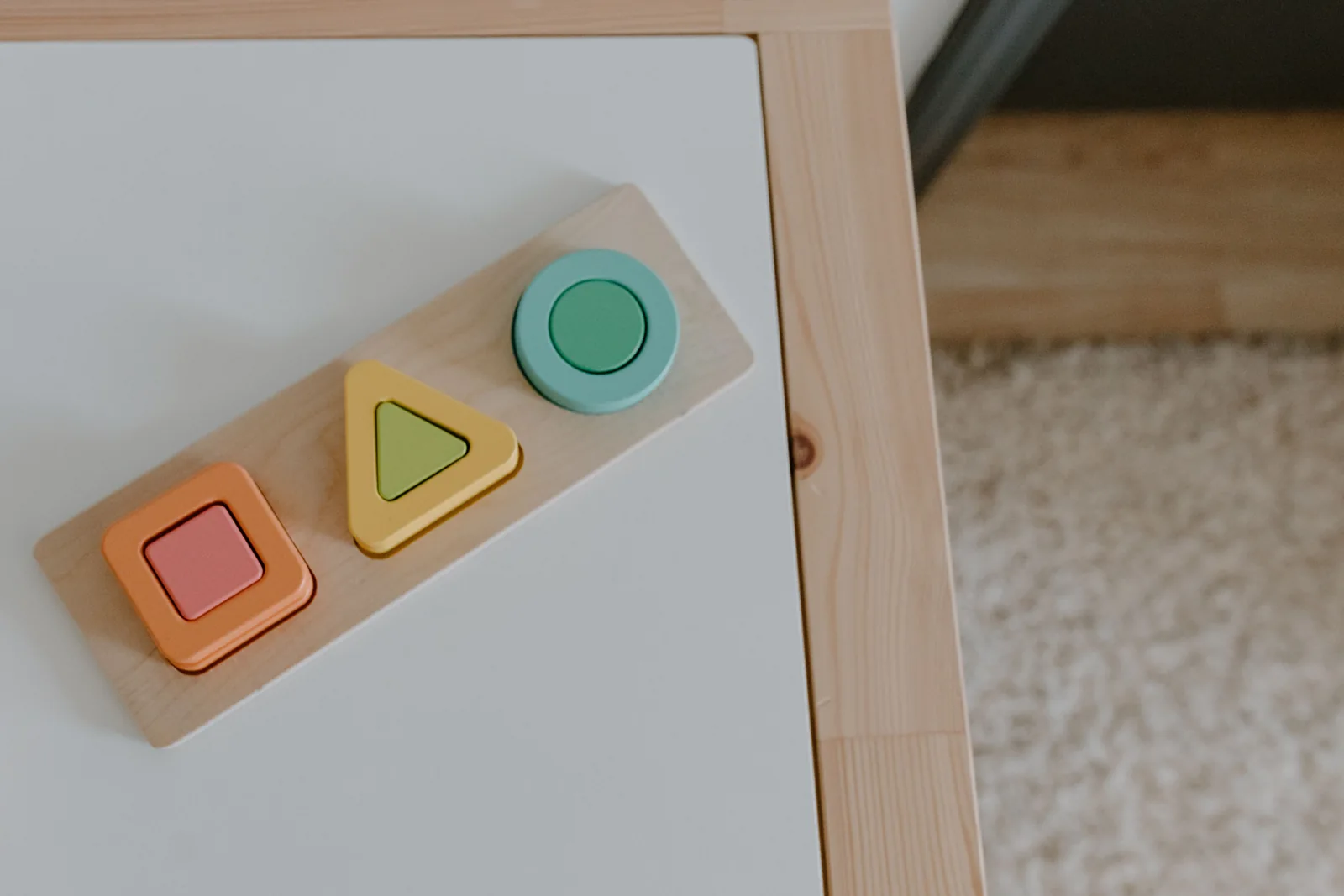
Preschool number board game: try “a visit to space six” with support matched to your child. The counter is on three and the move is two spaces. Your child says “one, two” and stops at five. On the next turn, name the spaces passed: “four, five”. There are different things to notice: moving one space per step, recognising a numeral and relating it to a position. Our board lets you explore these without turning play into a race.
At a glance
- Suggested ages: 3–4, 4–5, 5–6 years.
- Materials: A strip with six equal spaces numbered 1 to 6, one large counter and two cards showing one or two dots.
- Key idea: Follow the path with a finger and place the counter on one. Name the first spaces together.
Preschool number board game: what to notice
Ramani, Siegler and Hitti (2012) studied a linear numbered board with children in Head Start programmes, in small groups with adult support. They found improvements in several numerical skills compared with a colour board. Its layout and adult interactions were part of the intervention.
The findings do not show that every board game improves all mathematics or that adding English has an extra effect. Our shorter route is an original adaptation; it does not reproduce the study or promise its results.
Source: Ramani et al. (2012).
Notice what is counted as well as the move
Draw equal spaces in one straight line. From three, moving two, point to four and then five while naming them. This lets you distinguish counting steps from one and naming the numbers passed. Demonstrate both calmly without treating confusion as a lack of effort.
Begin in the language that makes talking about quantities easier. If you add four and five, your child can keep moving and pointing even when replying cuatro and cinco. In this adaptation, not knowing an English word should not prevent participation in the mathematical challenge.
Source: Ramani et al. (2012).
A visit to space six · setup and steps
You will need: A strip with six equal spaces numbered 1 to 6, one large counter and two cards showing one or two dots.
- Follow the path with a finger and place the counter on one. Name the first spaces together.
- Pick a dot card and show one move per dot, without counting the starting space as a step.
- While moving, name the destination spaces. From three, moving two: four, five. Take turns moving and helping.
- If a card exceeds the remaining spaces, move to six and finish together. Talk about where the counter ended.
Words to share
Español: Estamos en el tres.
English: We are on three.
Español: Avanza al cuatro y al cinco.
English: Move to four and five.
How to adapt it
Make it simpler
Use three spaces and a one-dot card. Move while your child points.
Extend the game
Extend to ten and ask which space is closer to the end before checking by moving.
At home
Play with a shared counter and destination; stopping to help is part of a turn.
In the classroom
Use small groups and notice the support each player needs: pointing, counting moves or recognising numerals. Keep the board visible to everyone.
A game can end with just one comparison explored together. The board offers an opportunity to investigate; this Lola & Sam activity was not evaluated in the cited study.
Activities to keep exploring
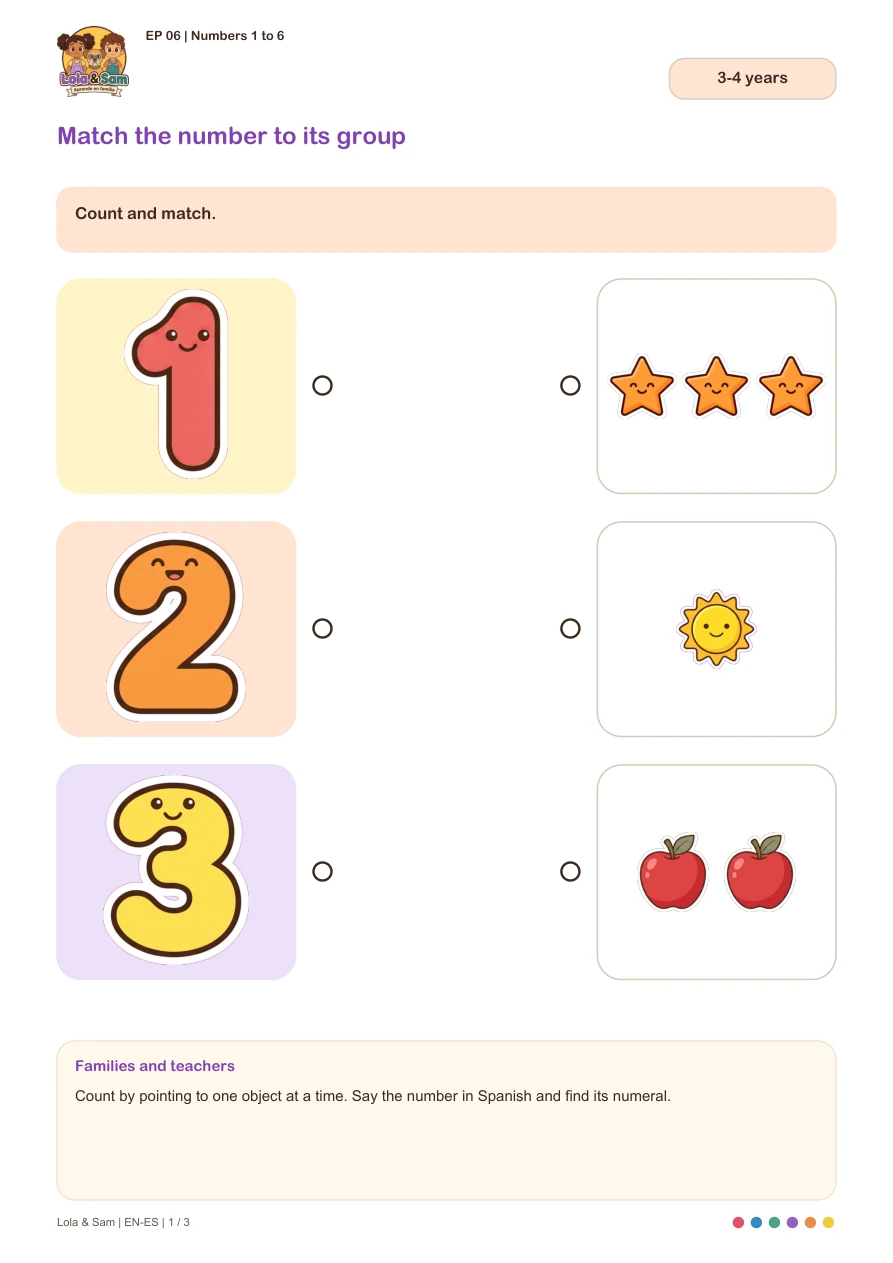
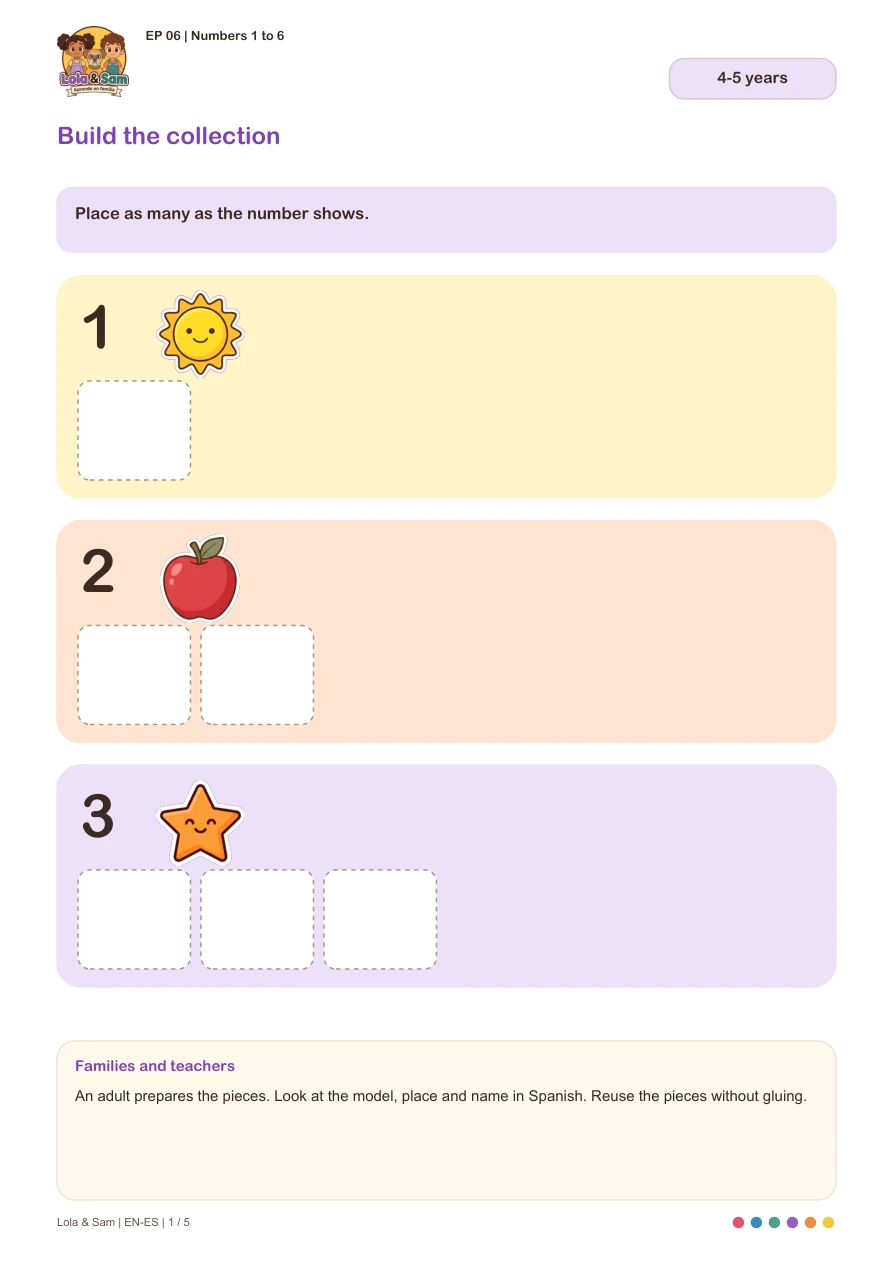
Sources and further reading
- Ramani, G. B., Siegler, R. S., & Hitti, A. (2012). Taking it to the classroom: Number board games as a small group learning activity. Journal of Educational Psychology, 104(3), 661–672. Read the study ↗
These games are Lola & Sam’s own suggestions. Course guides and professional guidance provide educational context; they do not establish the effectiveness of these activities. The cited studies do not evaluate our episodes or materials either.